
The Irish Corner
Mike Hennessy pays another visit to the Grange Cemetery in Edinburgh and reports on interesting new discoveries
On my last visit to Edinburgh, I found myself with some time on a lovely spring day and decided to visit the Grange cemetery once again, home to my great, great grandparents and of course to Canon Hannan. In Edinburgh's First Hibernian, I mention that several of Hannan's contemporaries are buried there, but I had not personally tracked down their gravestones, instead depending on others' accounts. I could of course have just contacted Bereavement Services at Edinburgh City Council, who for a modest fee will tell you the location of all graves in the city's graveyards. Wandering around the cemetery would be more fun, if more hit and miss.
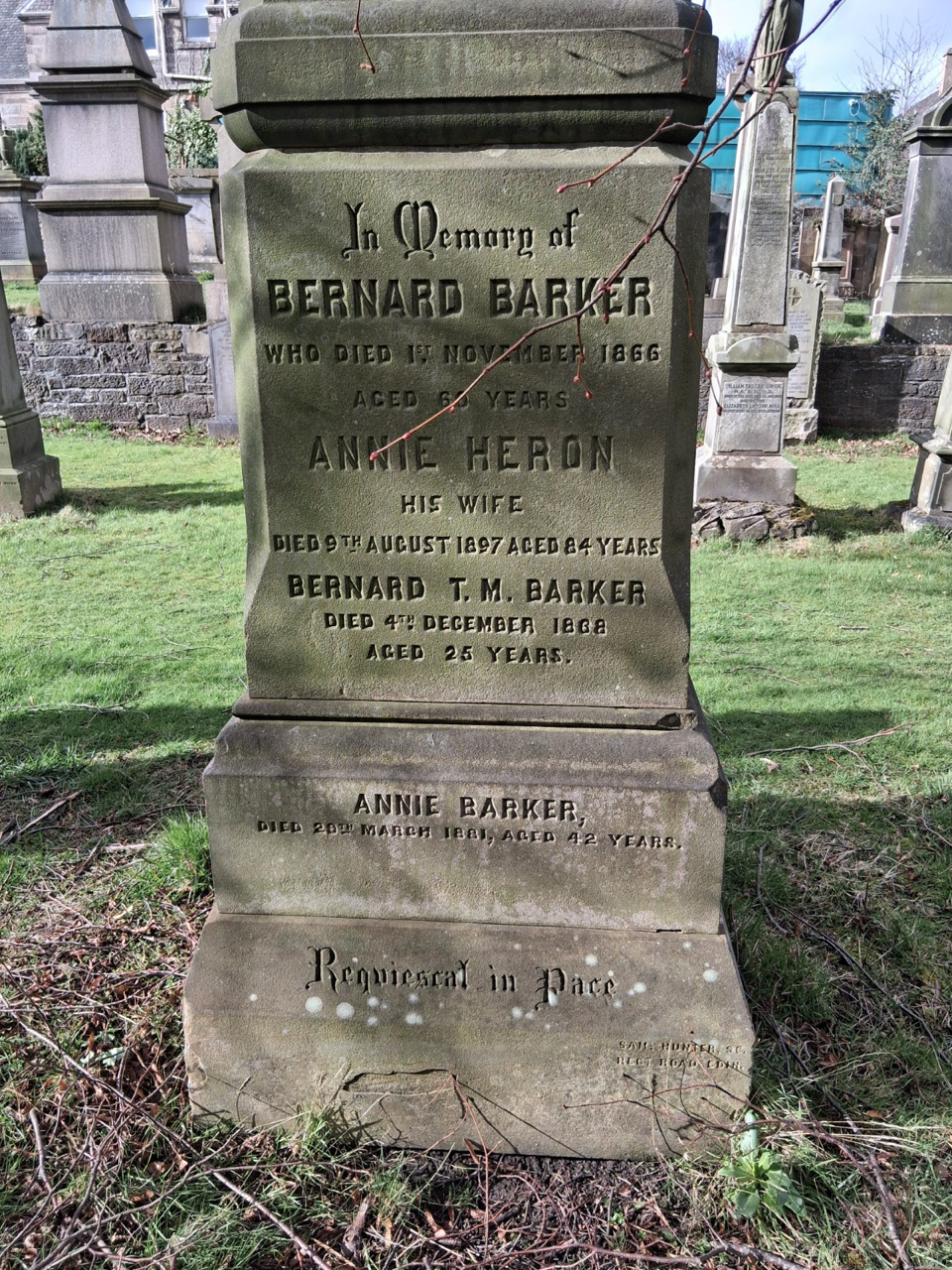
I couldn't have predicted how successful I would be. Four of the characters mentioned in my book are there, hiding (mostly ) in plain sight and withing a couple of minutes of Hannan himself. First, heading south and turning left just before the next section, lies Bernard Barker, an early leader of the Irish Community in the Old Town till his death in 1866. Barker owned several properties in the Cowgate, according to the Valuation Rolls, presumably rented out to Irish born immigrants as a first stop on their arrival in Edinburgh. Amongst his other activities he was an agent for selling church seats for special occasions such as midnight mass to those who could afford them.
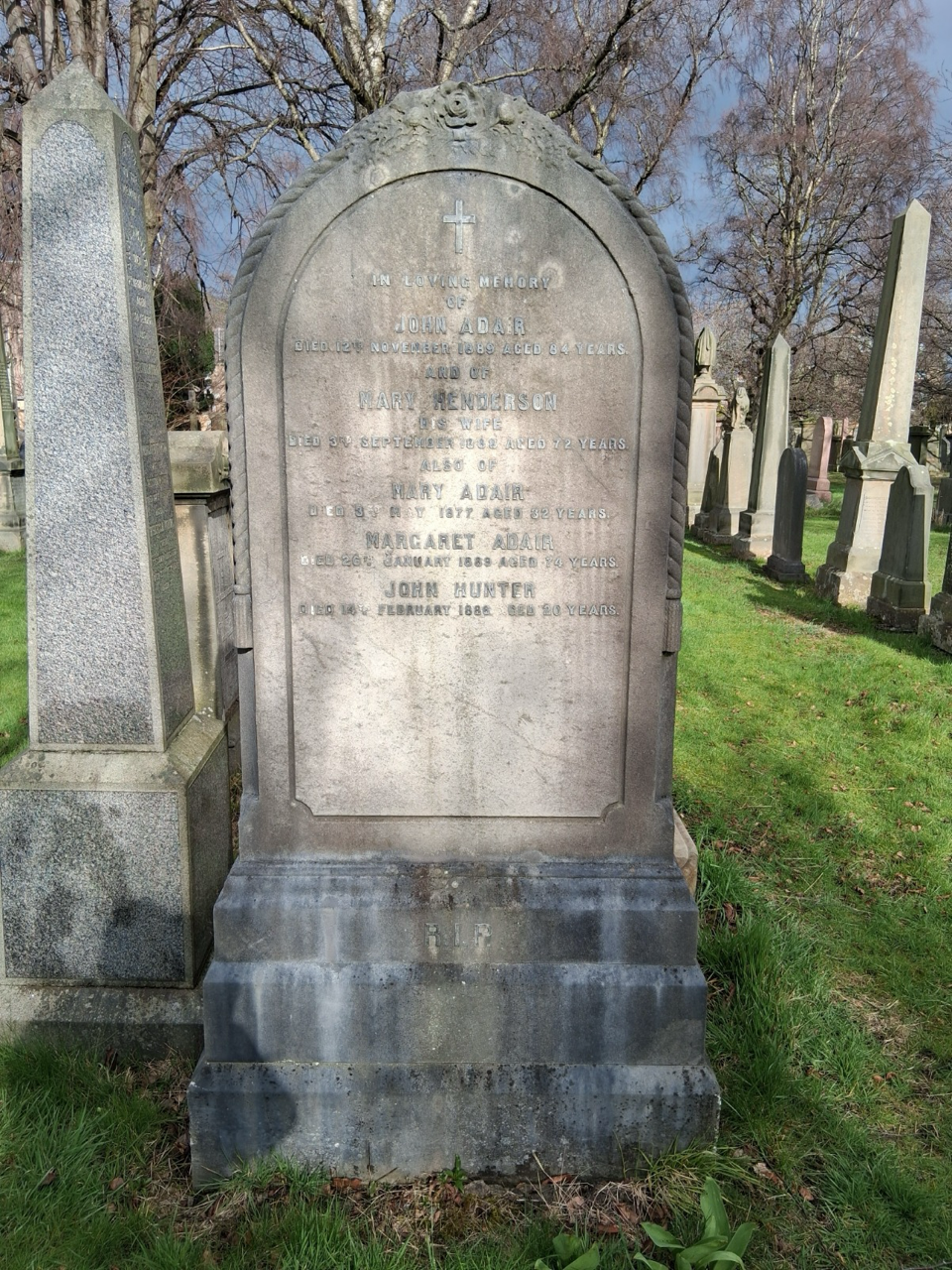
A few yards further on I came across the grave of John Adair, Barker's de facto successor as leader of the Irish community, founding member and later President of St Pat's CYMS. Adair was a former Chartist, an arrival in Edinburgh before the Famine wave, who built a renowned men's outfitter's business on South Bridge and Princes St, which he handed down to his son John junior on his death in 1889. Hannan famously is quoted as saying that apart from his own father there was no man he loved as much. Adair was also owner for many years of the Dunedin Temperance Hotel in the High St. Adair is covered in more detail on pp 237-238 of the book.
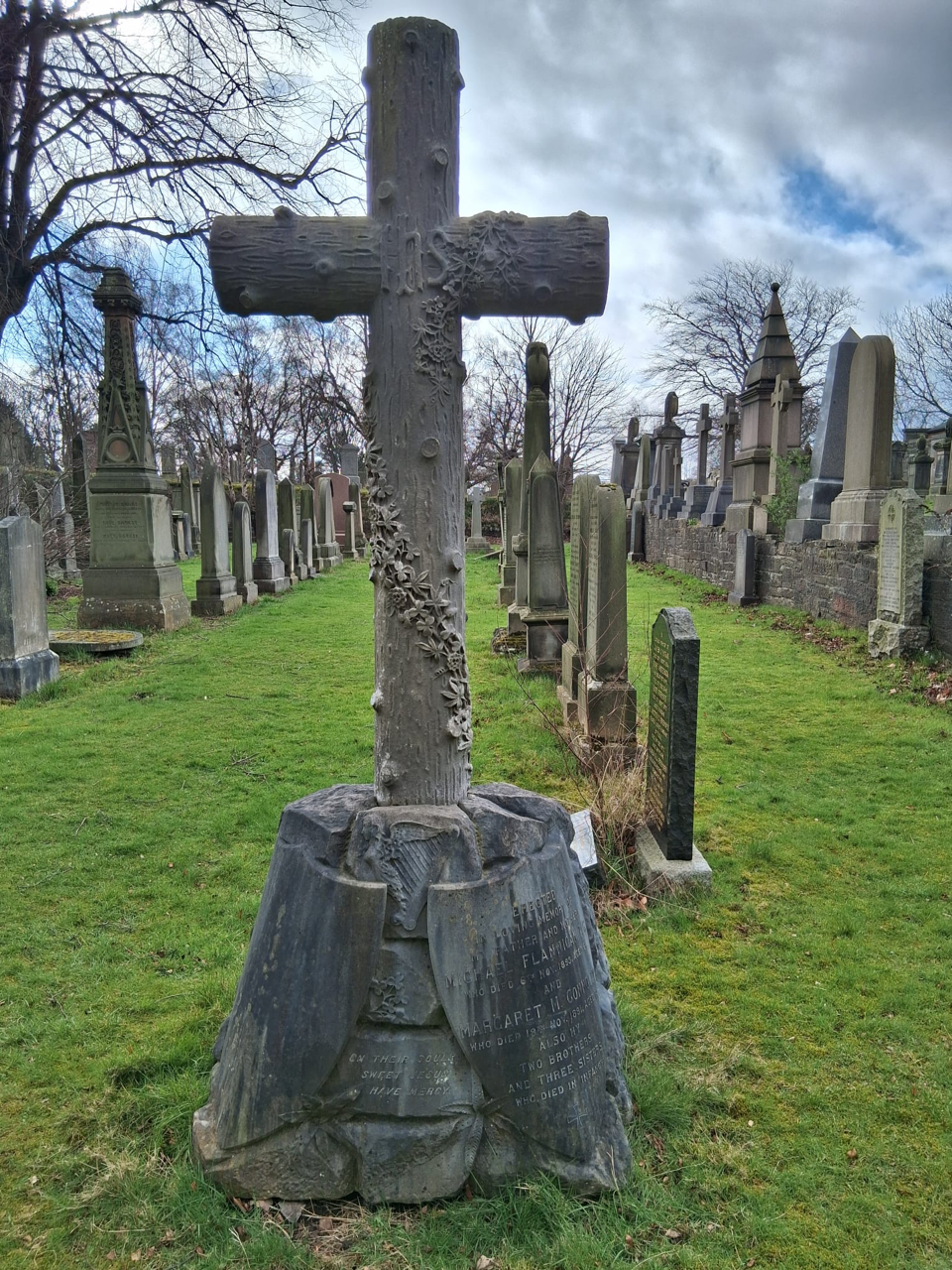
Heading back north in the row parallel to where Hannan lies, on a corner plot, I found the memorial to Michael Flannigan, who had taken on the mantle of Irish community leader from Adair. It was commissioned by his daughter for her parents and her 5 siblings, all of whom died in infancy. A pawnbroker by trade, Flannigan was President of the CYMS at the time of the showdown with Archbishop Smith in 1888 over the Plan of Campaign. He was also a leading figure in the Irish National League and President of Hibernian FC, and became the first Catholic Town Councillor in Edinburgh, representing St Giles Ward till his death in 1893. More detail is provided on pp 238-239 and 287-307 of the book.
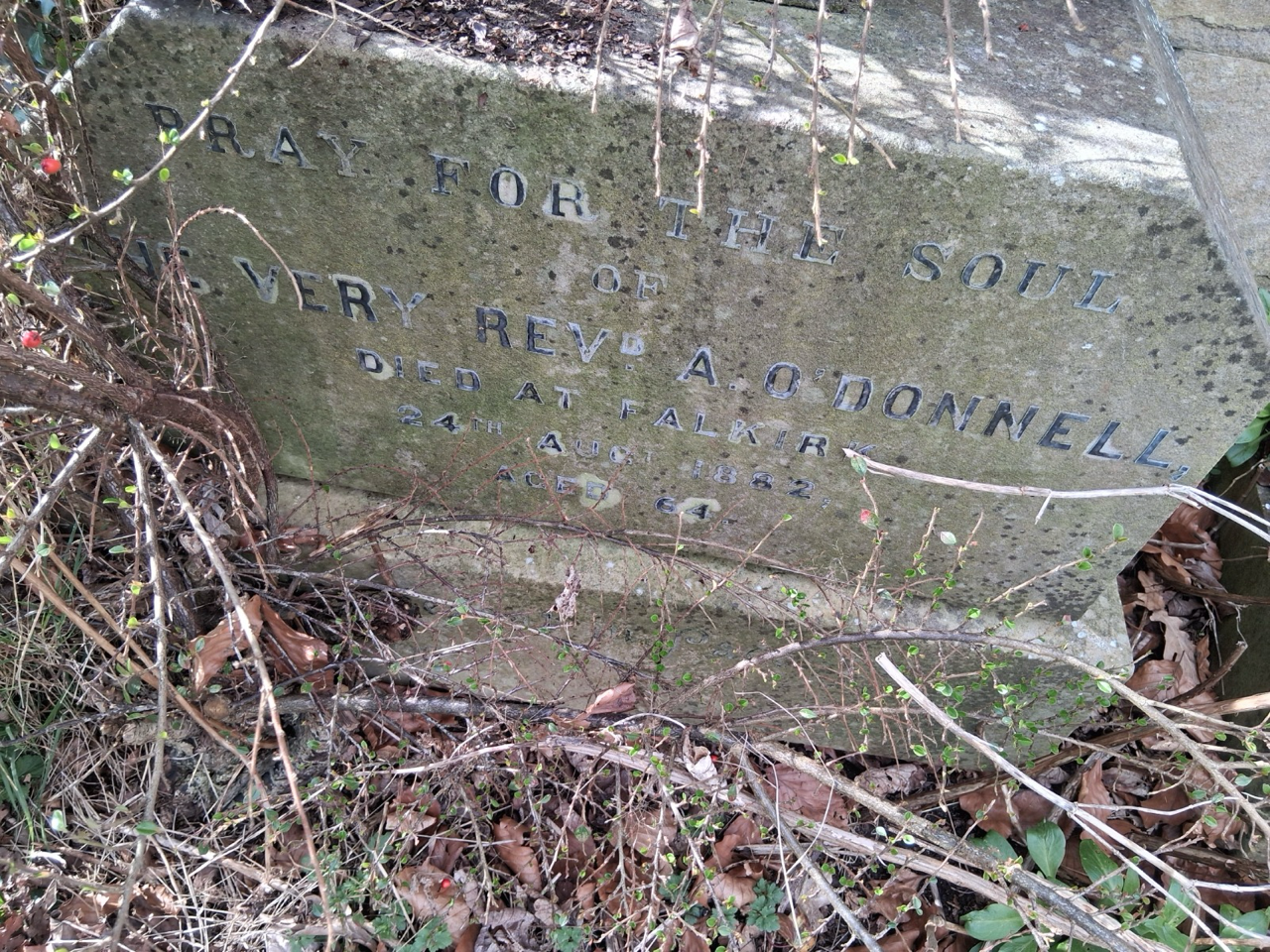
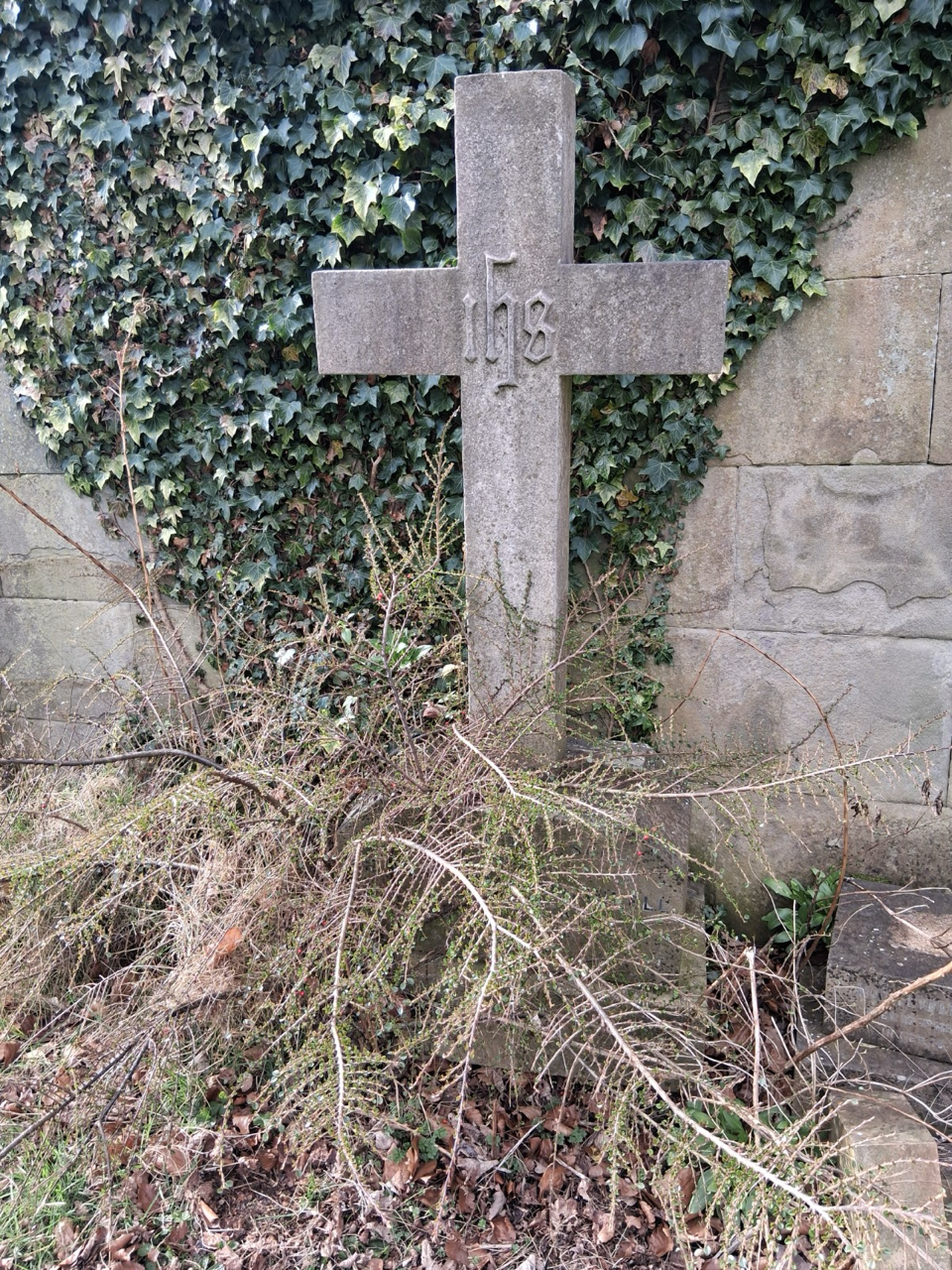
Finally I retraced my steps to Hannan's memorial and noticed a cross with IHS engraved upon it marking one of the graves on the wall opposite Hannan. A bush had unkindly obscured the name of the deceased. With no thought for my personal safety, I pulled back the bushes to reveal the grave of Fr Alex O'Donnell, Priest in Charge of St Pat's till 1869, when he was moved to be full time chaplain to St Margaret's Convent, thereby allowing Hannan's promotion. And the rest as they say is history. O'Donnell had been close to Bishop Gillis and indeed was his executor; he was also, along with Hannan and others, a trustee of Maryfield House orphanage on what is now Easter Road. Amongst his other claims to fame, he conducted the marriage ceremony for James Connolly's parents in the priests' house in Brown Square in 1856.
Finally, I really thought I had hit the jackpot when I discovered, only two graves away from Hannan and towards Beaufort Road, a William Corbett. Was this Hannan's friend and colleague from All Hallows and later St Pat's; he who had baptised my great grandfather and James Connolly ? Sadly my luck had run out. The deceased was a surgeon ( the priest had been a medical student, so close ) who died in Portobello in 1875; Fr William Corbett died in 1868.
When I get more time I will be back to see which other figures from the period I can find.